

Effective data vendor support means documented, import-ready historical datasets backed by direct engineer access and clear SLA commitments. Without that combination, a quant team ends up debugging bad backtests instead of trading. A vendor worth paying should hand you validated data, sample files to test before purchase, and a real technical contact when something breaks. BacktestMarket is one provider built around exactly that model.
TL;DR:
- Reputable vendors provide test files and clear file specifications before purchase to verify data structure and format compatibility.
- Support tiers vary significantly, with enterprise levels offering direct engineer access, faster response times, and escalation pathways.
- Onboarding artifacts like import scripts and test datasets are essential to prevent integration failures in the first week.
- Ongoing support includes automated integrity monitoring and versioned snapshots to ensure data quality and facilitate audits.
- Asking specific questions about response times, support scope, and data validation tools during procurement helps select a trustworthy data vendor.
Table of Contents
- What effective data vendor support actually includes
- Support tiers, SLAs and realistic response expectations
- Onboarding, integration, and ETL: avoiding the common failure modes
- Operational support and data-quality monitoring
- How to evaluate and select vendor support: checklist and questions to ask
- How BacktestMarket supports quantitative traders
- How vendors can reduce risk for quant teams
- Getting started with BacktestMarket support
- Sources
What effective data vendor support actually includes
Vendor support for historical market data isn't just a help desk that answers emails within a day. It's a set of concrete deliverables that let a quant team trust the data before ever running a backtest.
The baseline includes several components working together:
- Delivery flexibility: full dataset downloads, API access, or terminal-ready packs for platforms like MT4, MT5, or NinjaTrader
- Pre-purchase validation: documentation and sample files so you can check compatibility before spending money
- Escalation paths: a defined route to an actual engineer, not just a ticket queue
- Integrity controls: checksums, provenance records, and documented handling of holiday gaps and back-adjusted futures
- Onboarding artifacts: import scripts, conversion tools, and test datasets that prove the data works in your environment
Reputable financial-data vendors publish file specifications and sample datasets specifically so buyers can validate structure before committing. That single practice separates serious providers from resellers who just repackage someone else's feed.
Pro Tip: Ask for a sample file before you ask for a demo call. If a vendor hesitates to send raw sample data, that tells you more than any sales pitch will.
Support tiers, SLAs and realistic response expectations
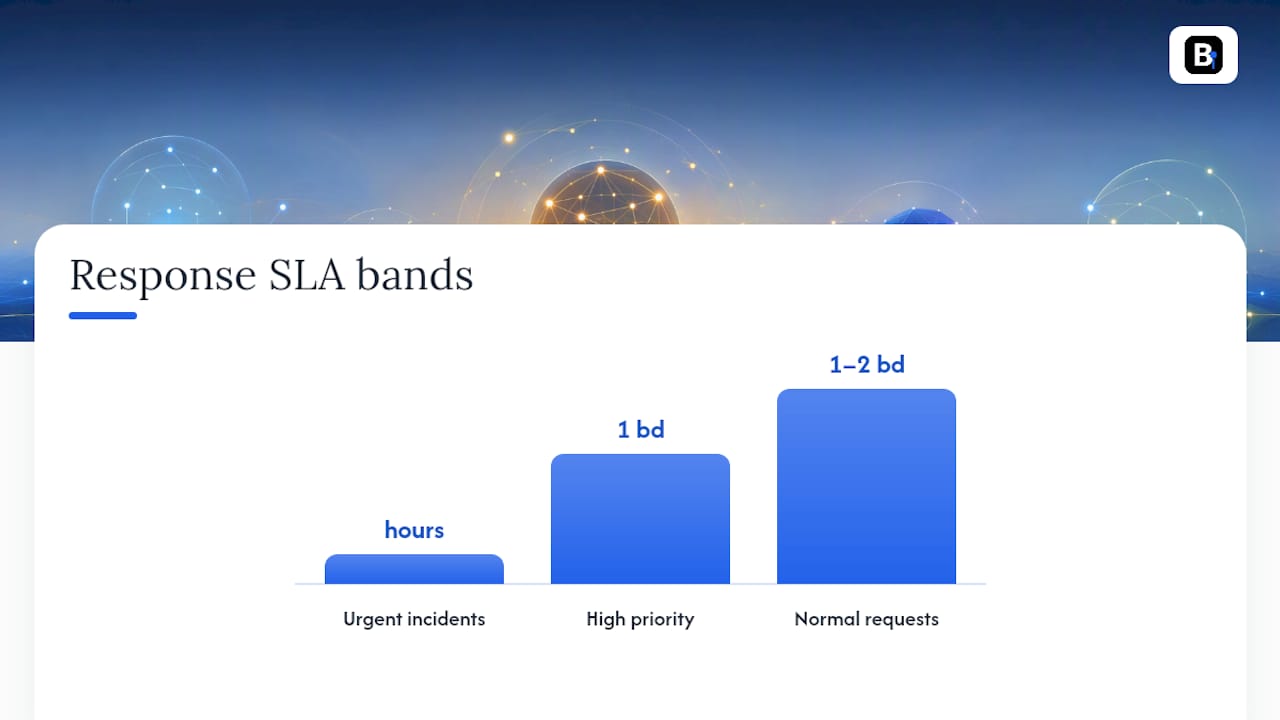
Most data vendors sell support in tiers, and the differences between them matter more than the marketing copy suggests. A basic tier usually gets you email support and a knowledge base. Standard tiers add ticket prioritization. Enterprise tiers are where you actually reach an engineer, and that access is often gated by contract value rather than available to everyone who asks.
Vendor support programs commonly structure response commitments around priority levels, and the published SLA bands from platforms like Socrata illustrate the pattern well:
- Urgent incidents (data corruption, feed outage affecting live trading) typically get first response within hours, not days
- High priority issues (a specific dataset showing gaps or mismatched timestamps) should see acknowledgment within a business day
- Normal requests (formatting questions, minor discrepancies) can reasonably wait one to two business days
Large platform vendors like Databricks tie technical assistance hours directly to subscription tier, and engineer access is often capped even at higher tiers. That's worth verifying during procurement, not after signing. Ask the vendor directly: does this tier include engineer time, or only community forum access? Get the answer in writing before you rely on it during a live incident.
Onboarding, integration, and ETL: avoiding the common failure modes
Most integration failures happen in the first week, and they're almost always preventable with the right vendor artifacts up front.
The onboarding package that actually prevents problems includes:
- File specifications showing exact column structure, timestamp format, and timezone convention
- Sample rows matching the real dataset, not a simplified demo version
- Import scripts or a dedicated conversion tool for your specific platform
- A small test dataset you can run through your full pipeline before buying the complete set
MT4 and MT5 imports fail most often over timezone mismatches and inconsistent decimal precision between broker feeds and vendor files. NinjaTrader users hit similar snags with session-time alignment. A vendor that provides a tested import guide for MetaTrader or an equivalent walkthrough for NinjaTrader eliminates most of this friction before it starts.
Your first-week validation checklist should cover three things: checksum verification against the vendor's published hash, timezone alignment against your platform's local settings, and a spot check of known holiday gaps against the vendor's documented handling.
Pro Tip: Run your test dataset through a dedicated converter tool before touching the full purchase. It catches format mismatches in minutes instead of after you've already loaded a year of minute bars.
Operational support and data-quality monitoring
Support doesn't end at onboarding. The vendors worth keeping run ongoing integrity checks and tell you when something changes, rather than waiting for you to notice a broken backtest.
What ongoing support should include:
- Automated integrity monitoring that flags anomalies (missing bars, duplicate timestamps, price spikes) before you find them yourself
- Diagnostic artifacts during incidents: logs, a reproducible sample of the problem, and a timeline of when it started
- Versioned snapshots so you can reference the exact dataset state used in a past backtest, which matters enormously for audit trails
- A defined escalation playbook for market events, discovered historical errors, or migrations between formats
Centralized data models that map provenance and maintain a single source of truth make audit trails feasible in a way ad hoc spreadsheets never do. If a vendor can't tell you which version of a dataset you're currently running, they can't help you reproduce a result from six months ago either.
How to evaluate and select vendor support: checklist and questions to ask
Procurement conversations reveal more than any sales deck. Ask pointed questions and watch how specifically the vendor answers.
Bring these questions into every demo or renewal negotiation:
- What's the documented first-response time for an urgent data-integrity issue, in writing?
- Does my tier include direct engineer access, or only tiered ticket support?
- Can I get a sample dataset and file spec before purchase, not after?
- What's your remediation policy if you discover a historical error in data I've already bought?
- What tools do you provide for import and validation, and are they included or sold separately?
Score vendors on documentation quality, how fast escalations actually move, and whether their toolset includes converters and validators you can run yourself. Auditability matters as much as raw data quality.
Watch for red flags: undocumented data transformations, matching logic the vendor can't explain, or a flat refusal to provide sample data before payment. Any of those should end the conversation.
Pro Tip: Put the sample-dataset delivery and acceptance criteria directly into the contract, not just the sales conversation. Verbal promises about support don't survive a dispute.
How BacktestMarket supports quantitative traders
BacktestMarket has delivered clean minute-bar historical intraday data since 2014, with complete dataset packs ready for direct import into MT4 and MT5. That maps directly onto the checklist above:
- Documented data integrity checks covering validation and gap handling
- Real-time support from engineers, not tiered ticket queues
- The BTM Data Converter for onboarding and format conversion
- Specialized datasets across forex, metals, bonds, and stock indices for teams needing coverage beyond a single asset class
How vendors can reduce risk for quant teams
Vendor support isn't a convenience feature. It's a control mechanism for reproducibility. When a vendor hands you versioned snapshots and real engineer access, you cut the hours spent chasing down why a backtest from March doesn't match a backtest from August. That gap is where most quant teams quietly lose weeks.
The teams that treat vendor selection as risk management, not just a data purchase, tend to catch integrity issues before they corrupt a live strategy rather than after. Engineer-level assistance during trading hours beats a generic 24/7 desk every time, because the people answering actually understand terminal-specific import quirks.
— Start
Getting started with BacktestMarket support
If you've made it through the checklist above, you already know what to ask for: sample data before purchase, direct engineer access, documented integrity checks, and import tools that actually work with your platform. That's the exact package BacktestMarket builds around.
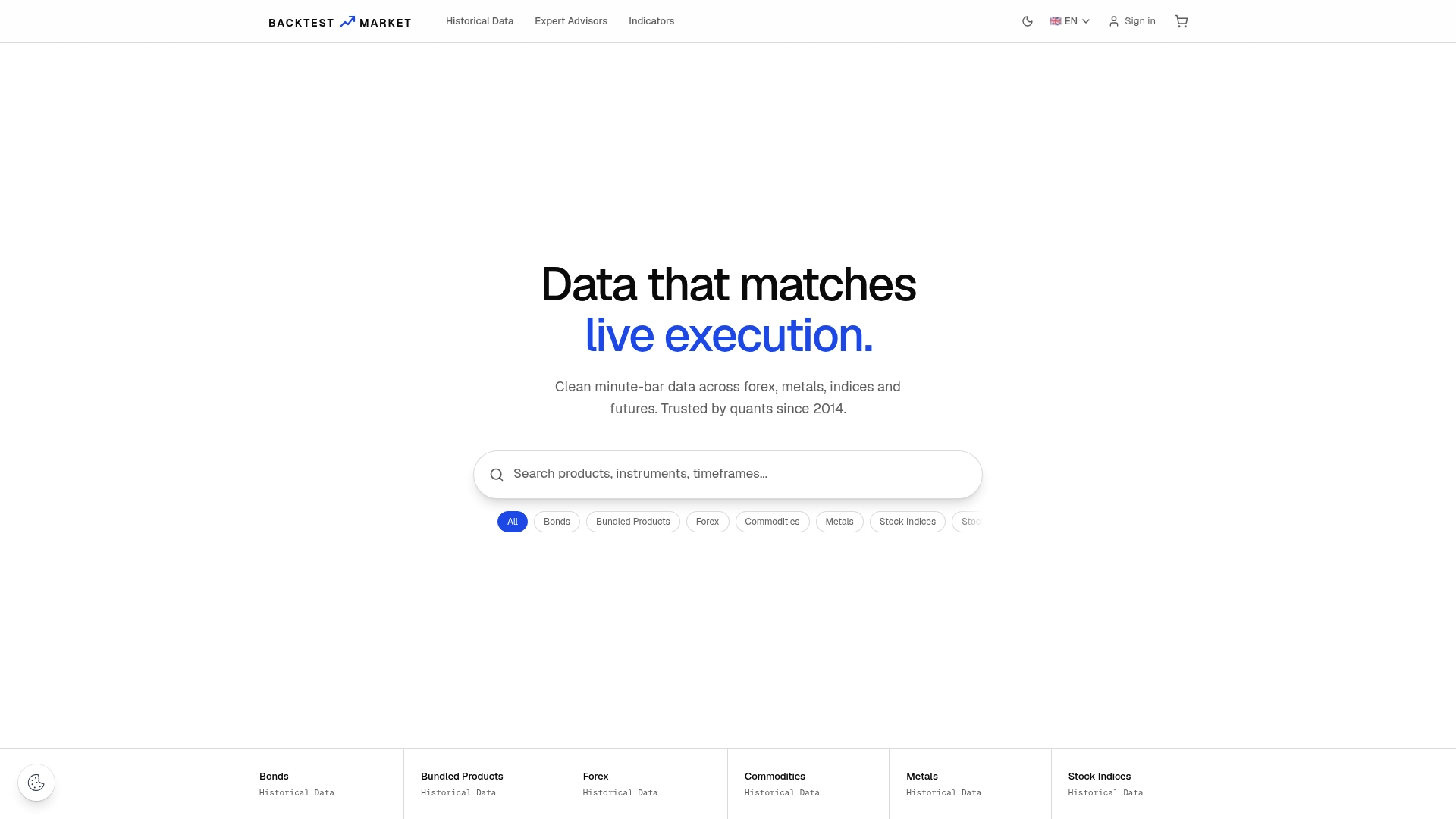
Every dataset ships as a complete, import-ready pack for MT4, MT5, or NinjaTrader, backed by real-time support from the engineers who built the data pipeline, not a rotating support queue. Browse the full product catalog to see coverage across forex, metals, bonds, and stock indices, or start with the MetaTrader import guide if you already know which dataset you need. For NinjaTrader users, the dedicated import walkthrough gets you from download to first backtest the same day. Visit BacktestMarket to check dataset specs and request a sample before you buy.
Sources
Recommended
- Data Integrity Checks: A Practical Guide to Trustworthy Data | BacktestMarket Blog
- Data Snooping Bias: How Researchers and Quants Catch It | BacktestMarket Blog
- BacktestMarket — Professional Trading Data & Expert Advisors | BacktestMarket
- Minute Bar Data: What Quants Need for Reliable Backtests | BacktestMarket Blog
Related resources
Explore BacktestMarket's Expert Advisor robots to put the ideas in this article into practice.