As a forex trader, you already know how challenging it is when your plan stops working. The appeal of automated trading is obvious: an emotionless system that identifies opportunities and executes trades without hesitation. But the path to a working automated portfolio is more nuanced than most beginners expect.
Two Paths to Automated Trading
There are two primary routes traders take when building algorithmic systems:
- Learn to code — write strategies from scratch using MQL4, Python, or another language
- Use strategy-generation software — tools that test thousands of indicator combinations on historical data to surface candidate strategies without requiring code
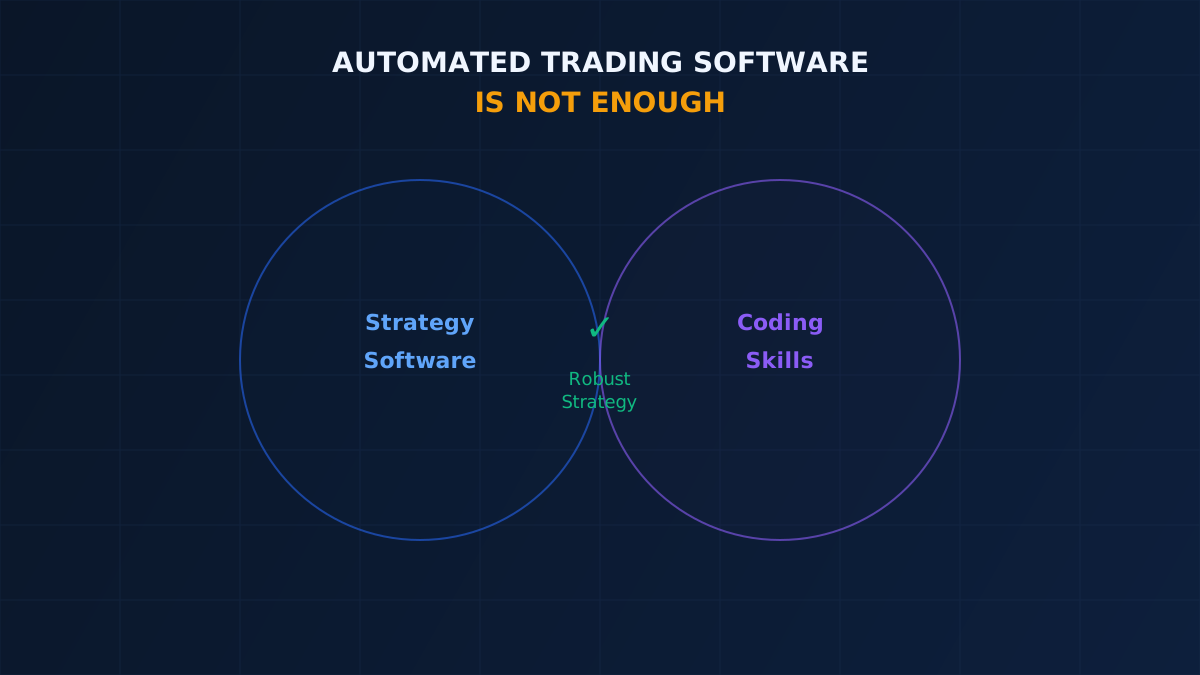
Both approaches have merit. The most effective traders combine them.
What Automated Strategy Software Does Well
Strategy-generation tools accelerate the discovery phase enormously. Instead of manually testing one hypothesis at a time, these platforms let you:
- Load years of historical data across multiple instruments
- Select indicators and parameters you want to test
- Run an optimisation engine across hundreds or thousands of combinations
- Filter results by profitability, drawdown, win rate, and other metrics
What might take a human analyst months to test manually, the software can evaluate overnight. This is genuinely valuable — the forex market contains countless recurring behavioural patterns, and automated search helps uncover ones you might never have thought to look for.
What the Software Cannot Do
Here is where many traders make a costly mistake: treating a strategy produced by software as a finished, tradeable system.
Automated discovery tools optimise for past performance. The raw outputs often:
- Are over-fitted to the specific historical window tested
- Have entry and exit rules that are technically functional but financially fragile
- Lack proper stop-loss and take-profit logic suited to real market conditions
- Miss edge cases that only appear during unusual volatility regimes
A candidate strategy from software is a starting point, not a finished product.
The Refinement Step
Once software identifies a promising candidate, manual work begins:
- Review the logic — does the strategy make economic sense, or is it pure curve-fitting?
- Refine stops and targets — optimise stop-loss levels and take-profit distances based on volatility and market structure
- Add risk management rules — position sizing, maximum drawdown limits, daily loss caps
- Walk-forward test — validate the refined strategy on data it was never optimised against
- Forward test on demo — run it in real-time on a demo account before committing capital
This refinement stage requires coding skills. Even if you used software to discover the strategy, you need to implement it properly in MQL4 or another language to control every parameter precisely.
The Right Mindset
Think of automated strategy software as a hypothesis generator. It narrows the search space and gives you raw candidates faster than manual research ever could. But the human layer — understanding why a pattern exists, stress-testing it, and coding it cleanly — is what separates traders who build durable systems from those who chase optimised backtest results that fall apart in live trading.
Neither the software alone nor the coding skills alone are sufficient. The combination is what works.