Blog
Articles, guides and insights on algorithmic trading, backtesting strategies, quantitative analysis, and data quality.
1–9 of 142 articles

Minute Bar Backtesting Accuracy: What It Is and How to Improve It
Minute bar backtests can only approximate live trading. Learn how to check data quality, handle intrabar ambiguity, model costs and validate results.
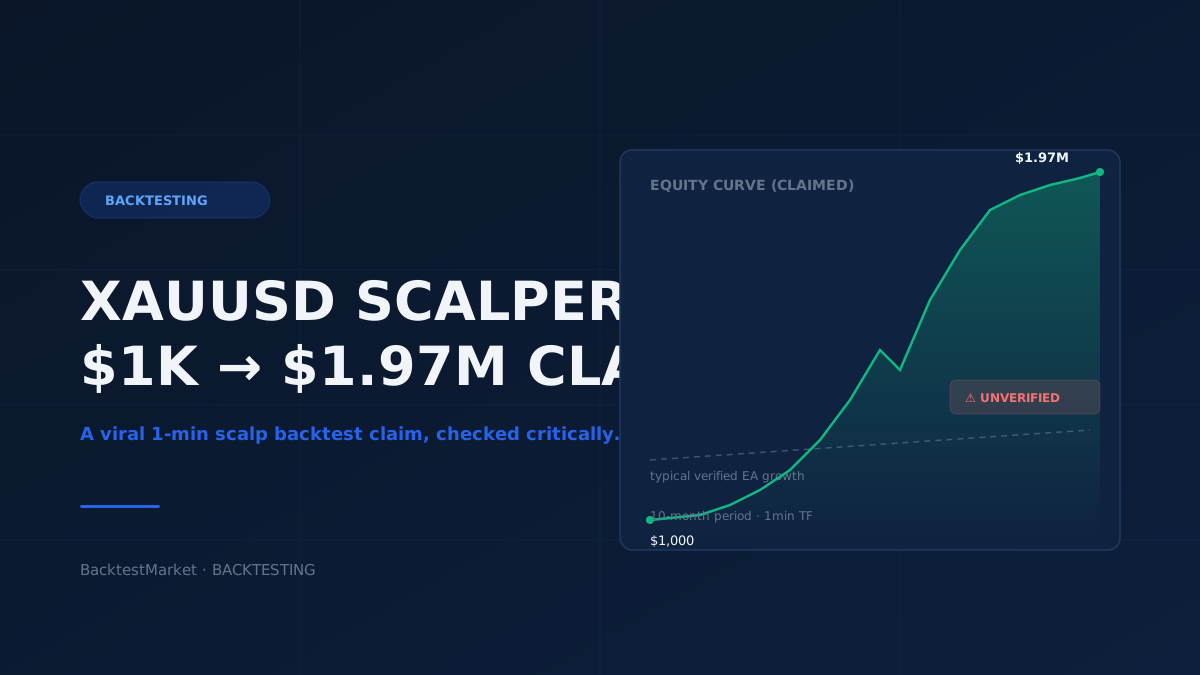
XAUUSD 1-Minute Scalper: What a '$1K to $1.97M in 10 Months' Backtest Actually Tells Us
A viral XAUUSD 1-minute scalping backtest claims a $1,000 account grew to $1.97 million in ten months. Here's how to read that kind of number critically, and how to build your own verification workflow before trusting any backtest.

Weekend Gap Modeling: Measure, Classify and Backtest Gaps
Learn how to define, measure and classify weekend gaps, clean the data behind them and backtest gap rules without look-ahead bias, using minute-bar data.

Mid Price vs Bid and Ask: What Each One Means
Mid price vs bid and ask explained with worked examples: how to calculate the midpoint, why you can't count on a fill there, and what it means for backtests.

Decimal Separator in MT4: Dot vs Comma for Prices and CSV Data
MT4 prices use a dot, but your Windows region or Excel may expect a comma. Learn where the mismatch bites and how to fix CSV imports and exports.

Exotic Forex Pairs Data: What to Check Before You Backtest
Exotic forex pairs data behaves differently from majors. Learn what counts as exotic, which fields matter, and how to audit minute bars before you backtest.

Calendar Spread Backtest: How to Test It Without Fooling Yourself
How to backtest a calendar spread: data you need, expiration and fill modeling, costs, metrics and common errors that make results look better than they are.

Forex Weekend Gaps: Why Price Jumps at the Sunday Open
What causes forex weekend gaps, how often they happen, whether they fill, and how to measure them on clean minute data before you backtest a gap strategy.
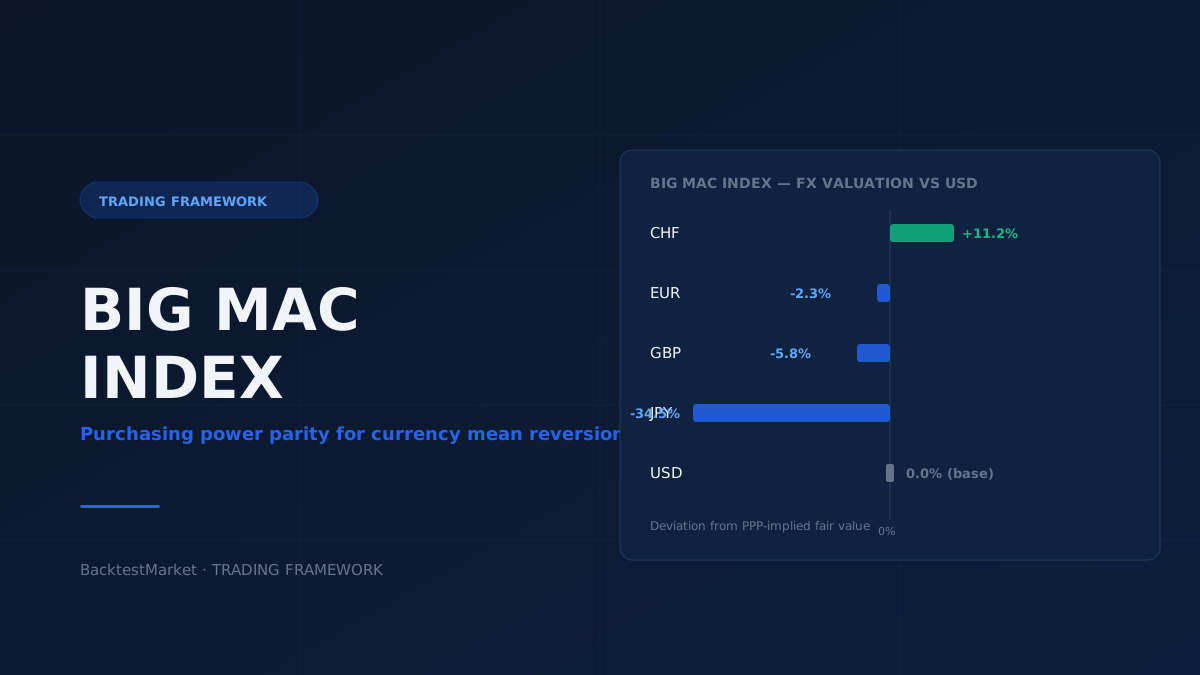
What the Big Mac Index Can Teach Algorithmic Traders About Currency Valuation
The Economist's famous Big Mac Index is more than a quirky economics lesson — it's a simplified purchasing power parity model that can inform how algorithmic traders think about long-term currency mean reversion and backtest design.